Quick Answer: A Square Is 100 Square Feet
In roofing, a square is a unit equal to a hundred square feet of roof area, and it is how roofers measure and price a roof. A typical home might have twenty to thirty squares or more depending on its size and roof shape. The cost per square, which covers the material and labor for that area, multiplied by the number of squares, makes up most of a roof's total price, with some fixed costs added. For a Woodcreek Reserve homeowner, understanding the square is what turns a roofing quote from a mysterious number into something you can read, compare, and evaluate against other bids.
What a Roofing Square Is
A roofing square is simply a hundred square feet of roof surface, a ten by ten foot area. It is a convenience unit the roofing trade uses because roofs are large, and counting in squares is easier than in individual square feet. Materials are often sold and estimated by the square too, so the unit runs through the whole process from measuring to ordering to pricing. When a roofer says your roof is twenty five squares, they mean about twenty five hundred square feet of roof area. For a Woodcreek Reserve homeowner, knowing this one definition unlocks most of how roofing is priced and quoted.
What Goes Into the Price Per Square
The price per square is not just the cost of the shingles. It bundles the material for that area plus the labor to install it, and it reflects the roof's complexity and pitch, since steeper and more intricate roofs take more time per square. Overhead, the contractor's experience, and the warranty offered also factor in. This is why per square prices vary between quotes and materials. For a Woodcreek Reserve homeowner, understanding that the per square figure covers both material and labor, adjusted for the roof, clarifies why it is higher than the raw price of the shingles alone and why it differs across bids.
Why Pitch Adds to the Square Count
A roof's pitch, or steepness, increases its surface area beyond the home's footprint. A flat roof has roughly the same area as the footprint, but a steep roof has considerably more, because the sloped surface is longer than the horizontal distance it covers. So two homes with the same footprint can have different square counts if one roof is much steeper. Roofers account for pitch when calculating the area, often using a multiplier based on the slope. For a Woodcreek Reserve homeowner, this is why a steep roof has more squares, and therefore costs more, than a low slope roof over the same footprint.
Why Per-Square Prices Vary
Per square prices differ between quotes for legitimate reasons. The material and its grade are the biggest factor, followed by local labor rates, which vary by market. The roof's pitch and complexity raise the per square cost, since steeper and more intricate roofs take more labor per square. Accessibility, the contractor's overhead and experience, and the warranty offered all play a role too. For a Woodcreek Reserve homeowner, this variation is why a per square figure from one source may not match your quote, and why comparing per square prices requires knowing what each one includes and what roof it applies to.
Material-Only vs Installed Per Square
It helps to distinguish two per square figures. Material only cost is just the price of the roofing for that square, which for asphalt is a fraction of the installed cost. Installed cost per square adds the labor, which is often a large share of the total. When you see a per square price, it usually means the installed cost, since that is what you actually pay a contractor. Confusing the two leads to wildly off estimates. For a Woodcreek Reserve homeowner, when comparing per square figures, the important thing is to make sure you are comparing installed costs to installed costs, not a material only price against a full installed quote.
Typical Per-Square Ranges by Material
Per square cost depends heavily on the material. Installed, asphalt shingles often run in the rough range of $400 to $700 or more per square, which is why most roofs use them. Metal roofing is considerably higher, frequently around $1,000 to $1,600 or more per square. Tile and slate are the highest, often $1,500 to $3,000 or more per square, reflecting the materials and specialized labor. These are typical ranges that vary by region, roof, and contractor. For a Woodcreek Reserve homeowner, the material sets the per square baseline, and multiplying it by the square count gives a rough sense of the total before fixed costs.
How Roofers Count Your Squares
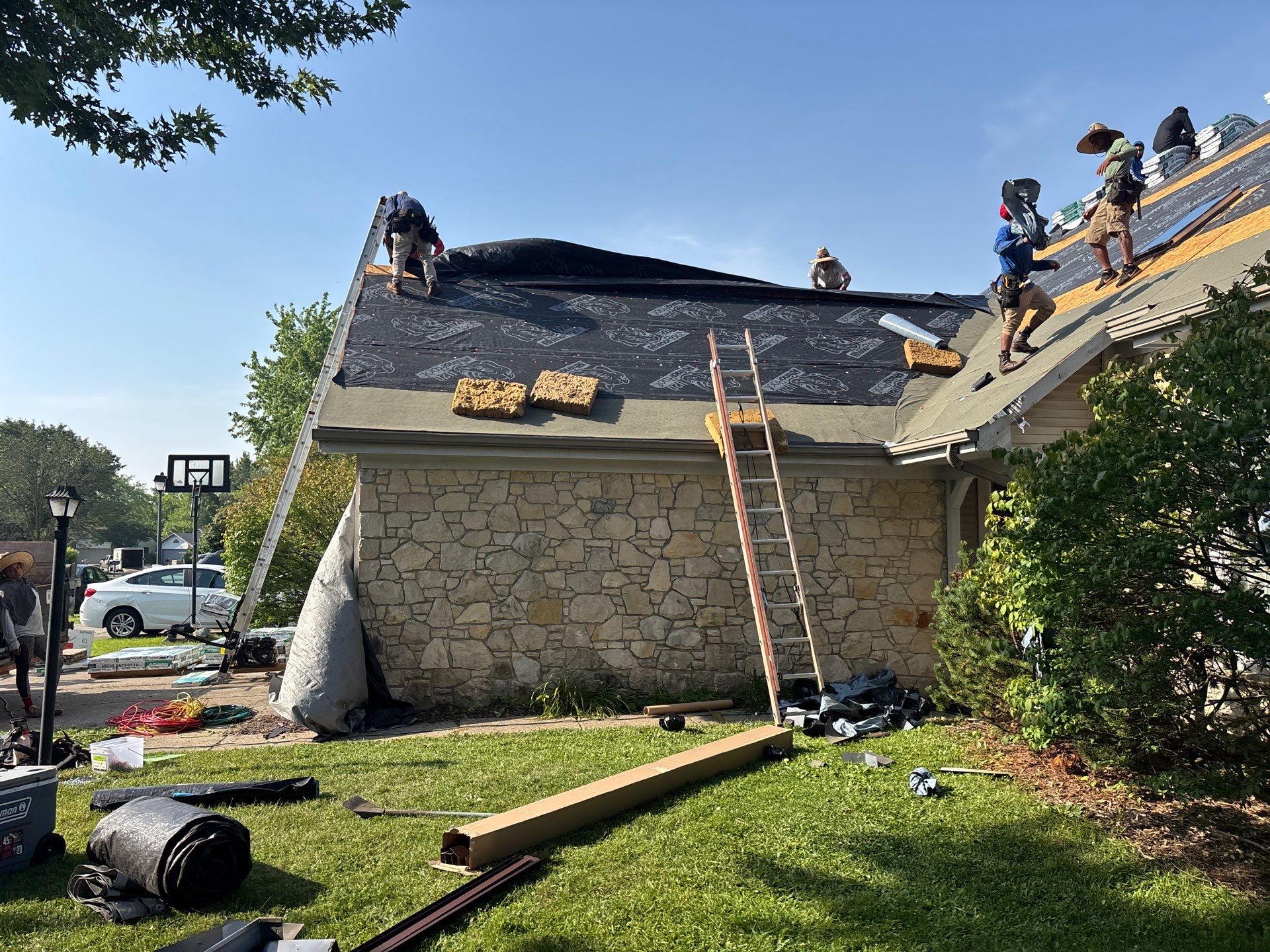
To find your square count, a roofer measures the actual roof surface, not the home's footprint. They measure each roof plane, add the areas together, and divide by a hundred to get the number of squares. This can be done by physically measuring on the roof, from the ground with tools, or increasingly with satellite or aerial measurement software that calculates the area precisely. The result is the base square count before adjustments. For a Woodcreek Reserve homeowner, the key point is that the square count comes from the roof itself, which is why a larger or more spread out roof has more squares than the home's floor area might suggest.
The Bottom Line on Per-Square Pricing
Per square pricing is the language roofing is quoted in, and understanding it puts a Woodcreek Reserve homeowner in a stronger position. A square is a hundred square feet, the count comes from the roof itself adjusted for pitch and waste, and the price per square bundles material and labor for that area. Multiply the two, add fixed costs, and you have the total. While the per square model explains the math, the only way to know your actual number is a measured estimate on your specific roof, where a roofer counts your squares precisely and applies a real per square rate.
From Per Square to Total Cost
Turning per square into a total is straightforward in principle. Multiply the price per square by the number of squares, including the waste factor, and you get the bulk of the roofing cost. To that, contractors add certain fixed or separate costs, such as tear off and disposal of the old roof, permits, and any decking repair, which may be line items rather than folded into the per square rate. The sum is the total quote. For a Woodcreek Reserve homeowner, knowing this calculation lets you sanity check a quote and understand how the per square rate and square count combine into the final number.
Using Per-Square to Compare Quotes
Per square pricing is a useful tool for comparing bids. If you divide each quote's total by the number of squares, you get an effective per square cost you can compare across contractors, which can reveal whether one is high or low. The catch is to ensure each quote covers the same scope and includes the same things, since a low per square figure that omits tear off or uses cheaper material is not a true bargain. For a Woodcreek Reserve homeowner, comparing effective per square costs, while checking what each includes, is a practical way to evaluate quotes beyond just the bottom line total.
The Waste Factor
Beyond the measured area, roofers add a waste factor to the square count, typically around ten to fifteen percent. This accounts for the material lost to cuts, the overlaps at valleys and hips, the starter course along the eaves, and the ridge caps. A complex roof with many valleys and angles wastes more material and carries a higher waste factor, while a simple roof wastes less. The waste factor ensures enough material is ordered to complete the job properly. For a Woodcreek Reserve homeowner, the waste factor explains why the material ordered, and the squares quoted, can exceed the bare measured area of the roof.